


To explore the opportunities, challenges, and growing impact of Artificial Intelligence (AI) and Data Science worldwide, particularly in the global South, the Academy is hosting a TWAS Distinguished Speaker Webinar Series, launched earlier this year.
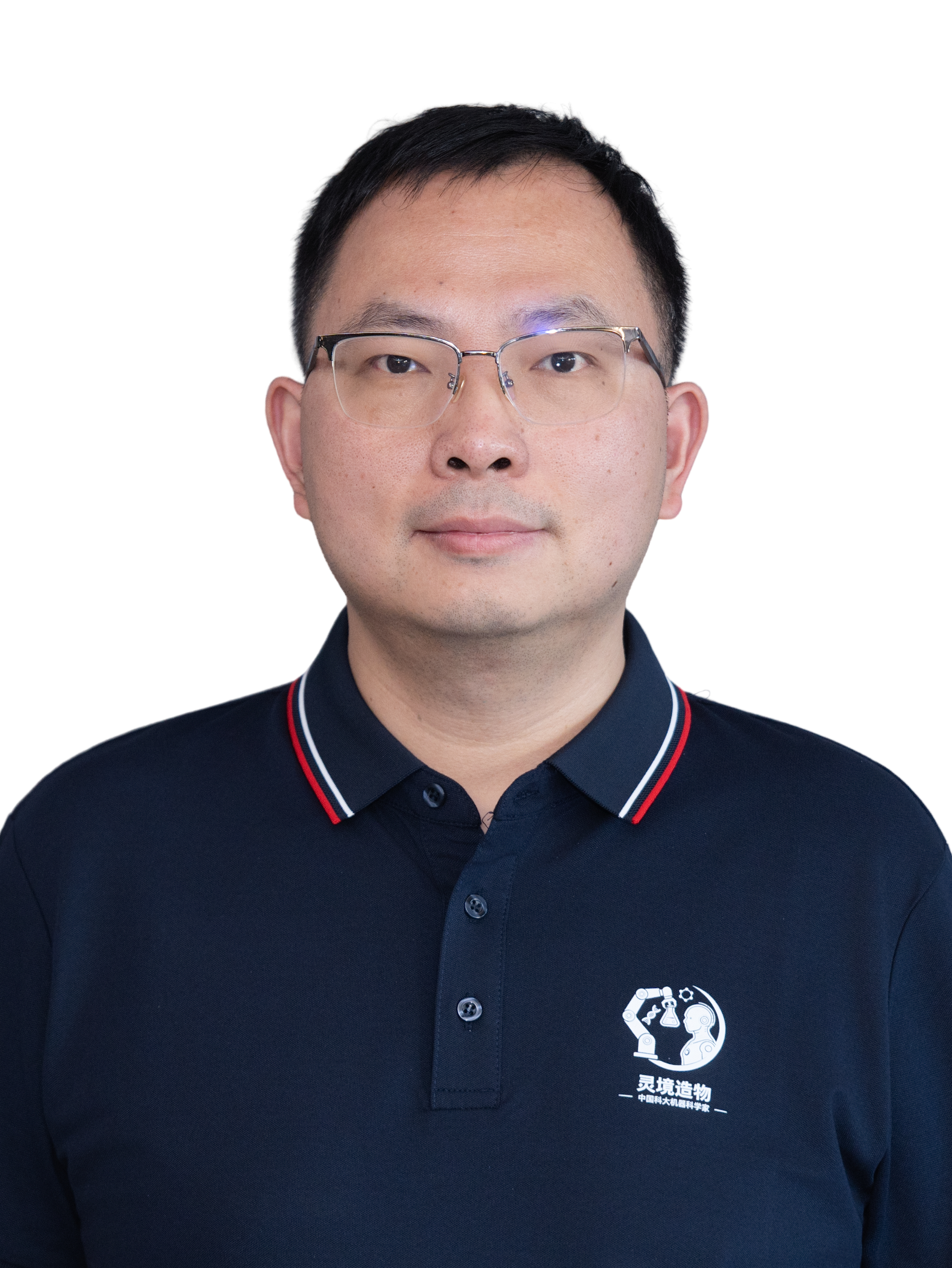
The fifth webinar in this series will feature Jun Jiang, a distinguished professor of physical chemistry at the University of Science and Technology of China (USTC), within the School of Chemistry and Materials Science.
The event will take place online via Zoom on 16 November at 3 pm Rome time (4 pm CEST), in a 40-minute lecture format, followed by a 20-minute Q&A session. Register here.
Abstract
The primary challenge in AI-driven scientific innovation stems from the scarcity and fragmentation of high-quality data. Existing datasets are often limited, skewed toward successful outcomes, and lack comprehensive multi-property characterization. To address this, a federated global infrastructure of cloud-connected, autonomous laboratories has been proposed to serve as decentralized “data power plants” that generate fully characterized, reproducible datasets via robotic experimental workflows.
The technical pathway to realize this vision is structured into five hierarchical levels:
G1 (Process Automation): Focuses on the automated execution of pre-defined experimental protocols.
G2 (Theory-Experiment Iterative Loop): Algorithm-driven closed-loop where experimental feedback refines computational models.
G3 (Large Model-Driven): Employs large language models (LLMs) or multimodal models for high-level cognitive tasks and experimental decision-making.
G4 (Multi-Platform, Multi-Task): This level enables scalability, intelligent collaboration, and cross-domain scheduling across multiple experimental platforms and tasks.
G5 (Autonomous Scientific Discovery): Achieves emergent exploration and autonomous knowledge creation.
Currently, at the G4 level, we have developed a large-model-driven software platform. It coordinates domain-specific small AI models, such as quantum chemistry and simulation, and robotic experiments. This integration facilitates intelligent scheduling and real-time fine-tuning of pre-trained models based on experimental data, creating a dynamic, synergistic feedback loop.
This approach has led to significant breakthroughs in the design and synthesis of novel materials, including high-entropy catalysts, optical polymer films, luminescent COF materials, and multifunctional proteins. Tasks that previously required over a century of exhaustive experimental screening were completed within months.
By building a global infrastructure for AI-driven innovation, this framework transforms isolated scientific efforts into a collaborative, resilient engine for discovery. It democratizes access to high-quality data and breaks down geographical and institutional barriers to innovation, ultimately accelerating industrial-scale scientific and technological advancements.
Who is Jun Jiang
Jun Jiang is a distinguished professor of physical chemistry at the University of Science and Technology of China (USTC), within the School of Chemistry and Materials Science. He earned a PhD in theoretical chemistry from the Royal Institute of Technology, Sweden, in 2007, and another PhD in solid-state physics from the Shanghai Institute of Technical Physics, Chinese Academy of Sciences, in 2008, following a Bachelor of Science degree from Wuhan University in 2000.
He has published more than 150 papers in prestigious journals including Nature Synthesis, Nature Energy, Journal of the American Chemical Society, Angewandte Chemie International Edition.
Jiang is a recipient of the National Science Fund for Distinguished Young Scholars in China, and has won the Young Theoretical Chemistry Investigator Award of Chinese Chemistry Society, Distinguished Lectureship Award of the Chemical Society of Japan 2020.
His research interests focus on the development and application of theoretical chemistry methods and machine learning techniques in chemistry science. By integrating robotic experiments, quantum chemistry simulations, and artificial intelligence-guided predictions, his group has developed a data-driven robotic AI-chemist platform, targeting a wide range of chemistry and materials studies such as photocatalysis, biochemistry, photochemistry, molecular electronics, and photonics.
His recent work has demonstrated that generative AI combined with spectroscopic descriptors has the potential to revolutionize chemical material design by overcoming the constraints of conventional atomic-coordinate-based descriptors, leading to a new way to combine generative AI and mobile robots for the intelligent discovery of new chemicals and materials.
More in-depth information about his research work is available here.