

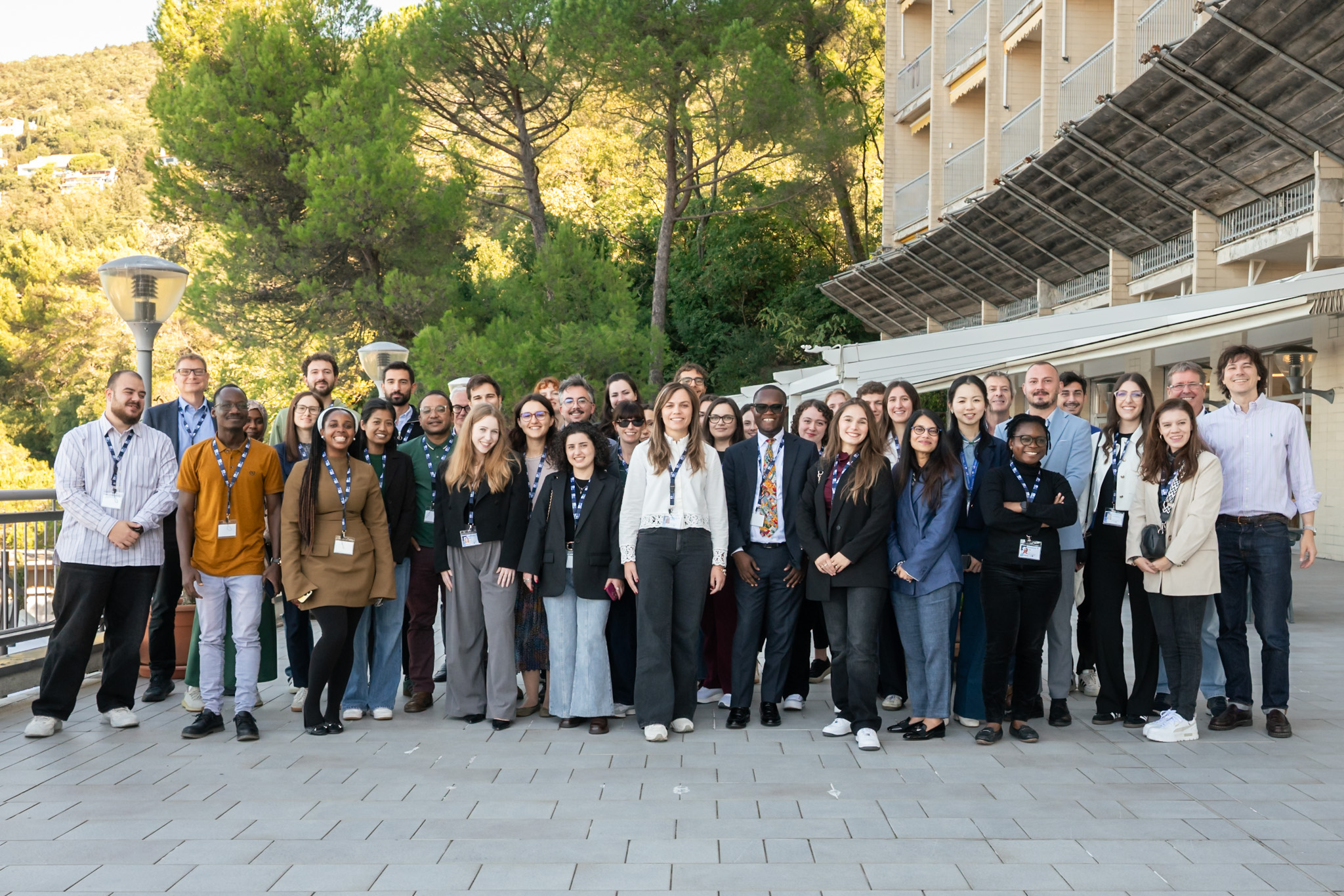
Young researchers often have strong technical expertise but little formal training in communicating it, especially to policymakers and the wider public. To help close that gap, the Science Communication for Young Professionals and Early-Career Researchers Training Workshop took place on 13–14 October 2026 in Trieste, Italy. Organised by UNESCO Venice, the University of Plymouth and TWAS, it gathered early-career researchers and young professionals from across Europe and beyond, working in fields ranging from climate and atmospheric science to biodiversity, oceanography, artificial intelligence and public health.
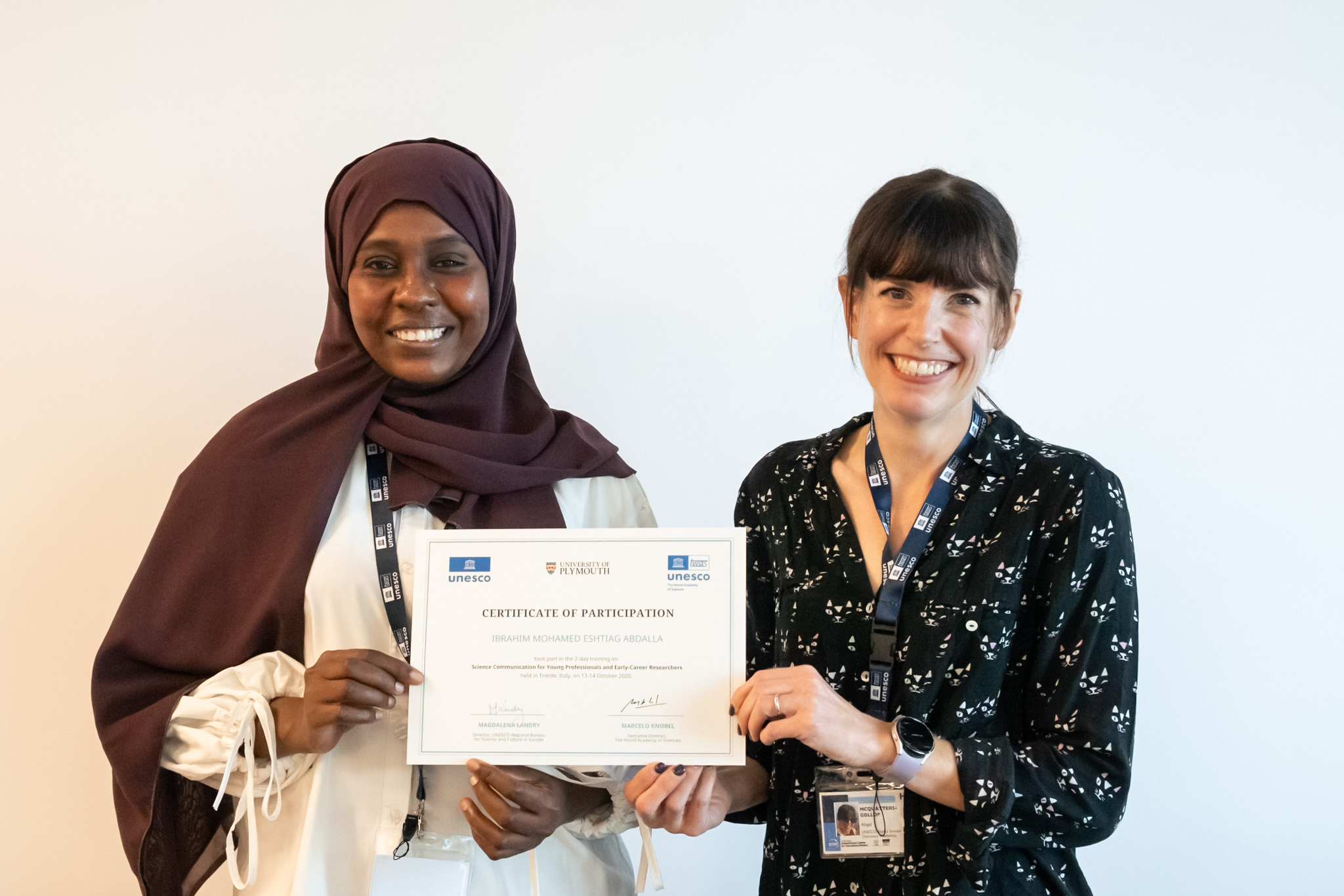
Among the attendees, there were three researchers who are currently carrying out research in Trieste thanks to the TWAS-Sissa-Lincei Research Cooperation Visits Programme: Idrissa Sawadogo, a PhD candidate in Climate Change, Biodiversity, and Pastoral Systems at University Félix Houphouet-Boigny in Côte d’Ivoire, Prajwal Rajbhandari, President of the Research Institute for Bioscience and Biotechnology (RIBB) in Nepal, and Eshtiag Abdalla Ibrahim Mohamed, lecturer at the University of Bahri in Sudan.
Over two days, participants explored how to translate complex scientific evidence into clear, policy-relevant messages for decision-makers, the media and the public. The programme included four training modules: strategic science communication; communicating technology, digital tools and AI for sustainability; communicating water, biodiversity and climate science in place-based contexts such as Biosphere Reserves and UNESCO Global Geoparks; and science storytelling, media and policy engagement. A discussion on ethics, inclusion and youth leadership completed the programme.
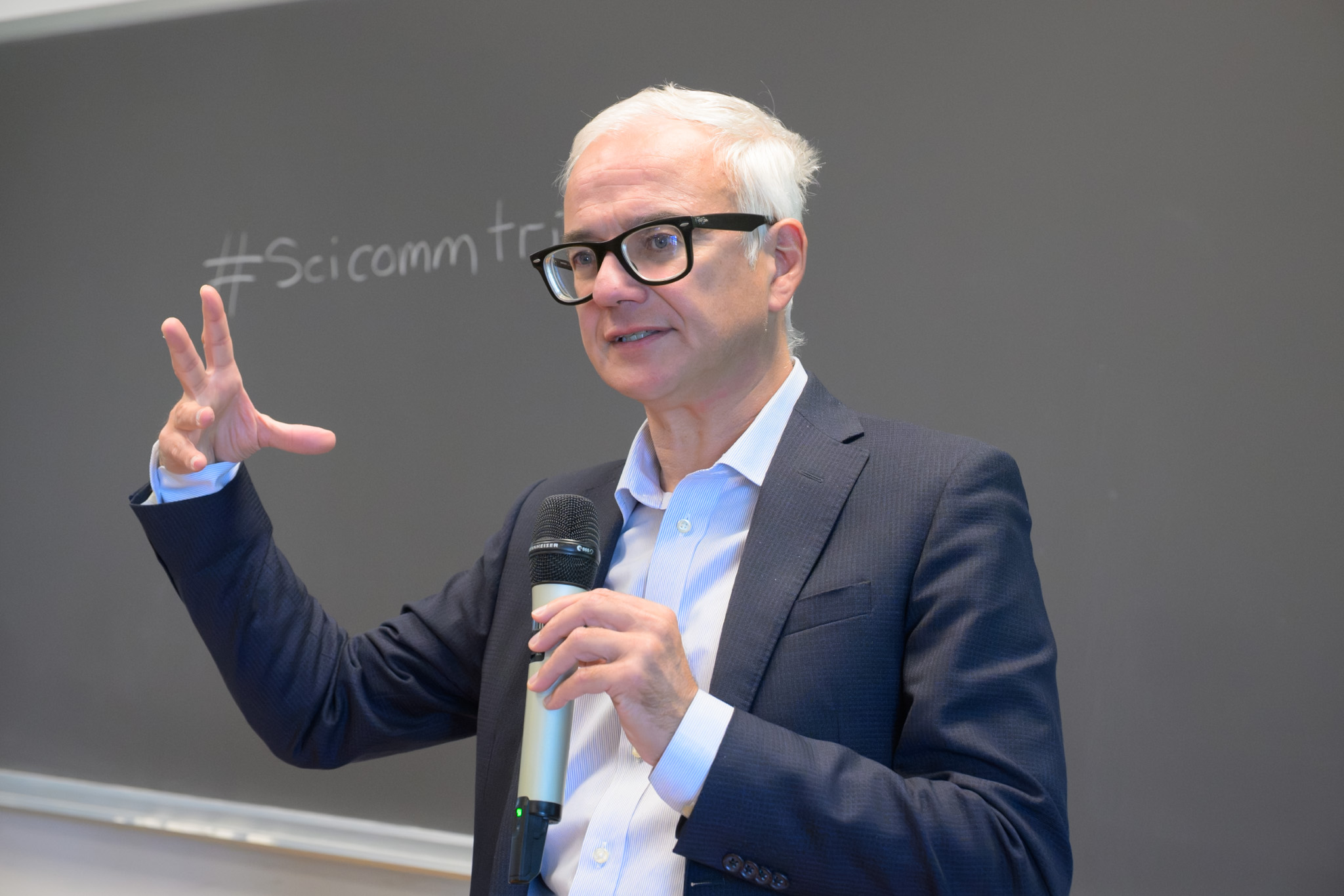
“Early-career scientists are the future of research and innovation needed to support sustainable development and to build authentic and impactful collaboration across science-policy-society interfaces,” said William Blake, director of the Sustainable Earth Institute at the University of Plymouth, UK.
“It was inspiring to see participants learning from each other's experiences across disciplinary and geographical boundaries. They were not only developing communication skills, but also building connections that will support collaboration and knowledge exchange throughout their careers,” he added.
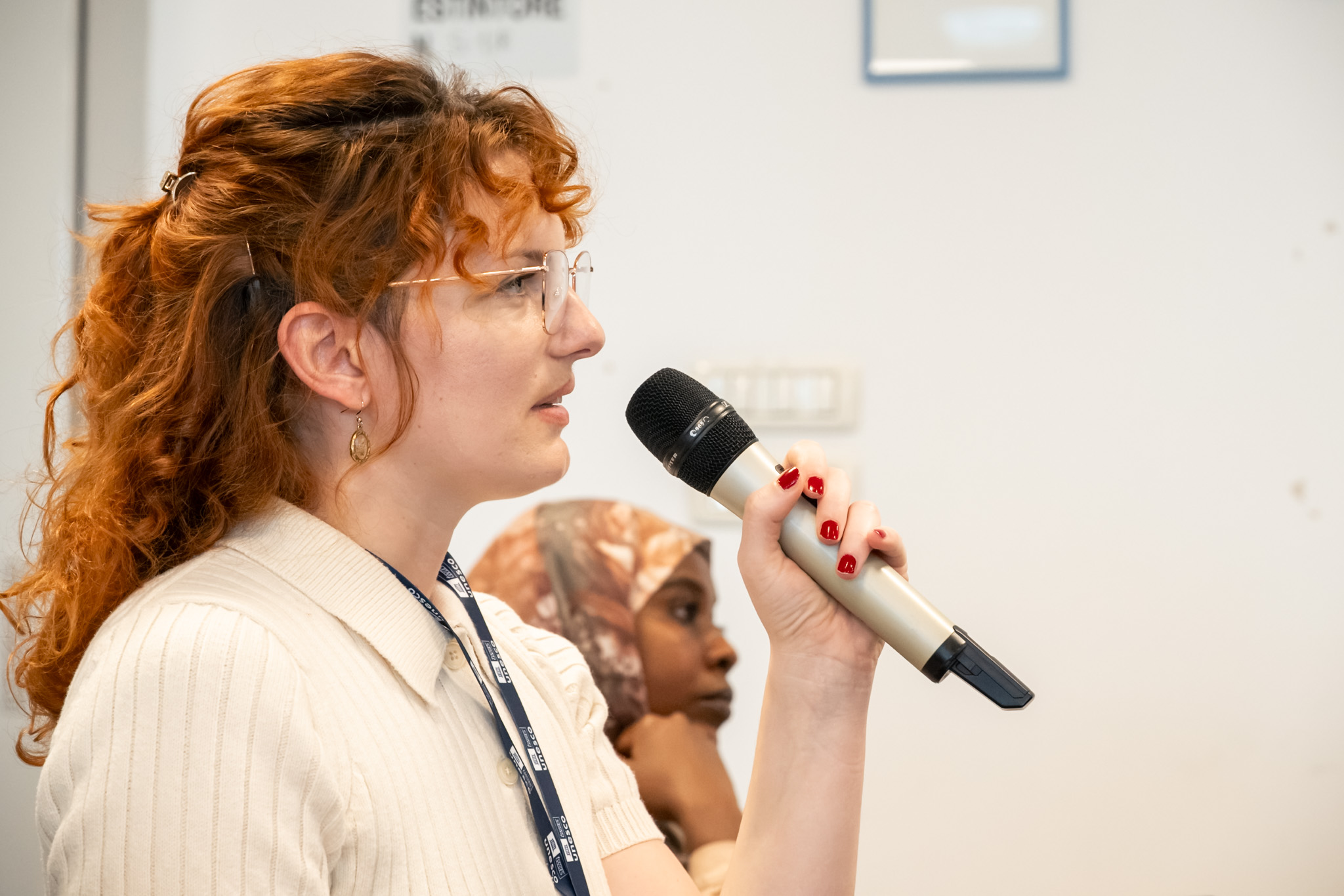
“The workshop was a valuable experience that helped me understand how to communicate complex research in a clear, accessible, and engaging way,” said Argjira Sahiti, PhD Candidate in Economics at the International Balkan University (IBU) of Skopje, North Macedonia.
“I especially appreciated the practical sessions and the opportunity to learn from researchers from different backgrounds. It reinforced my belief that effective science communication is essential to connecting research with society and ensuring that scientific knowledge can contribute to informed decision-making,” sha said.
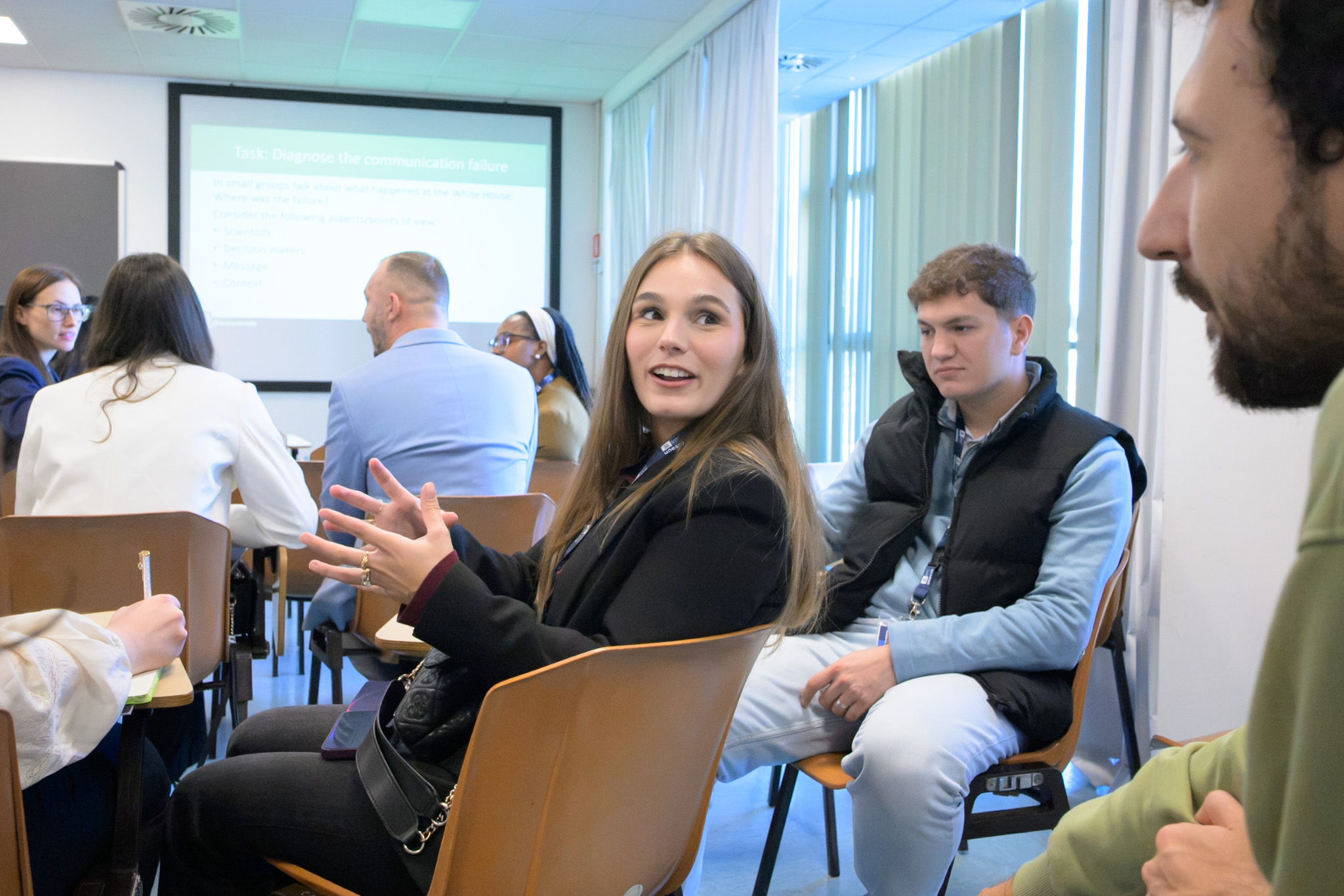
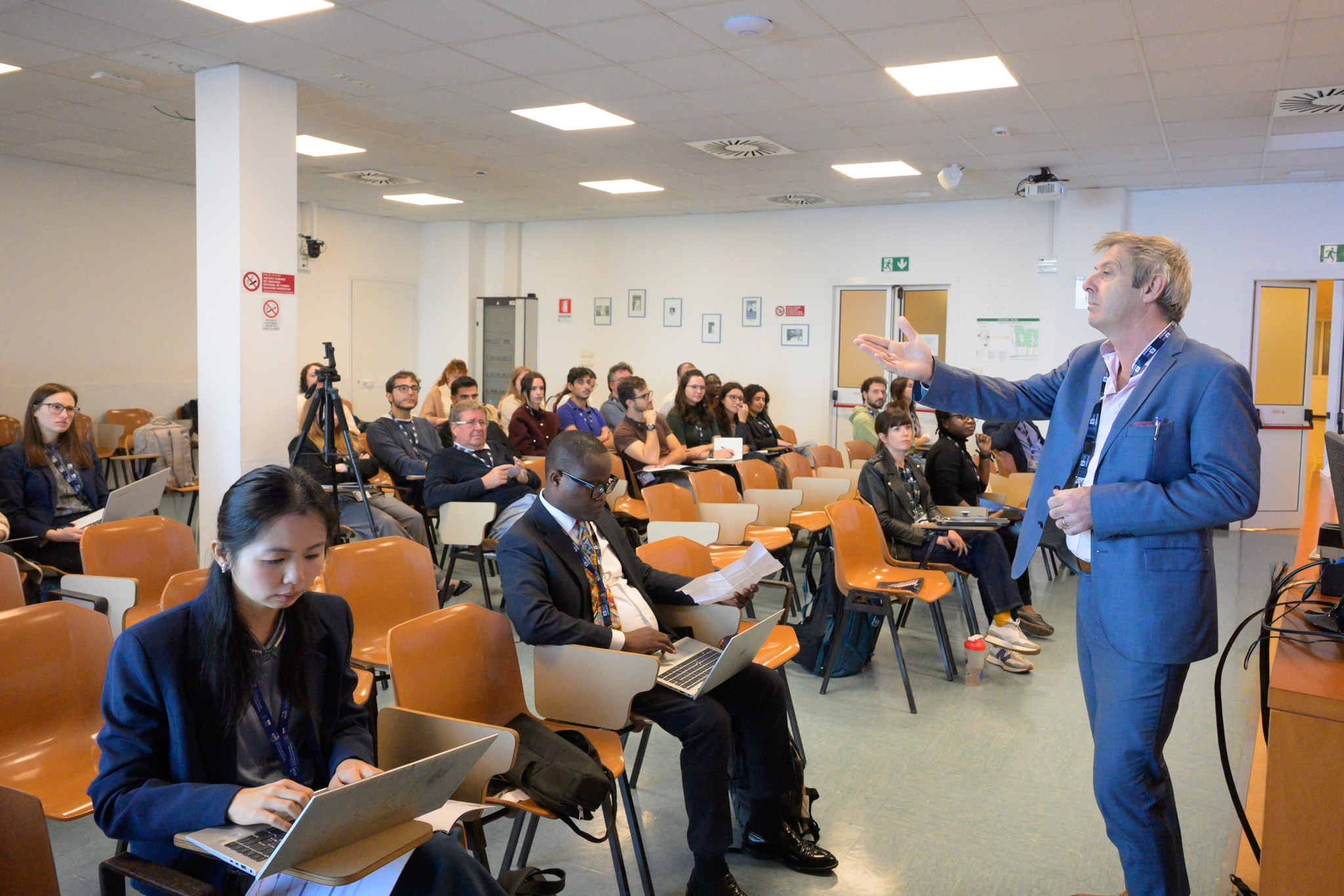
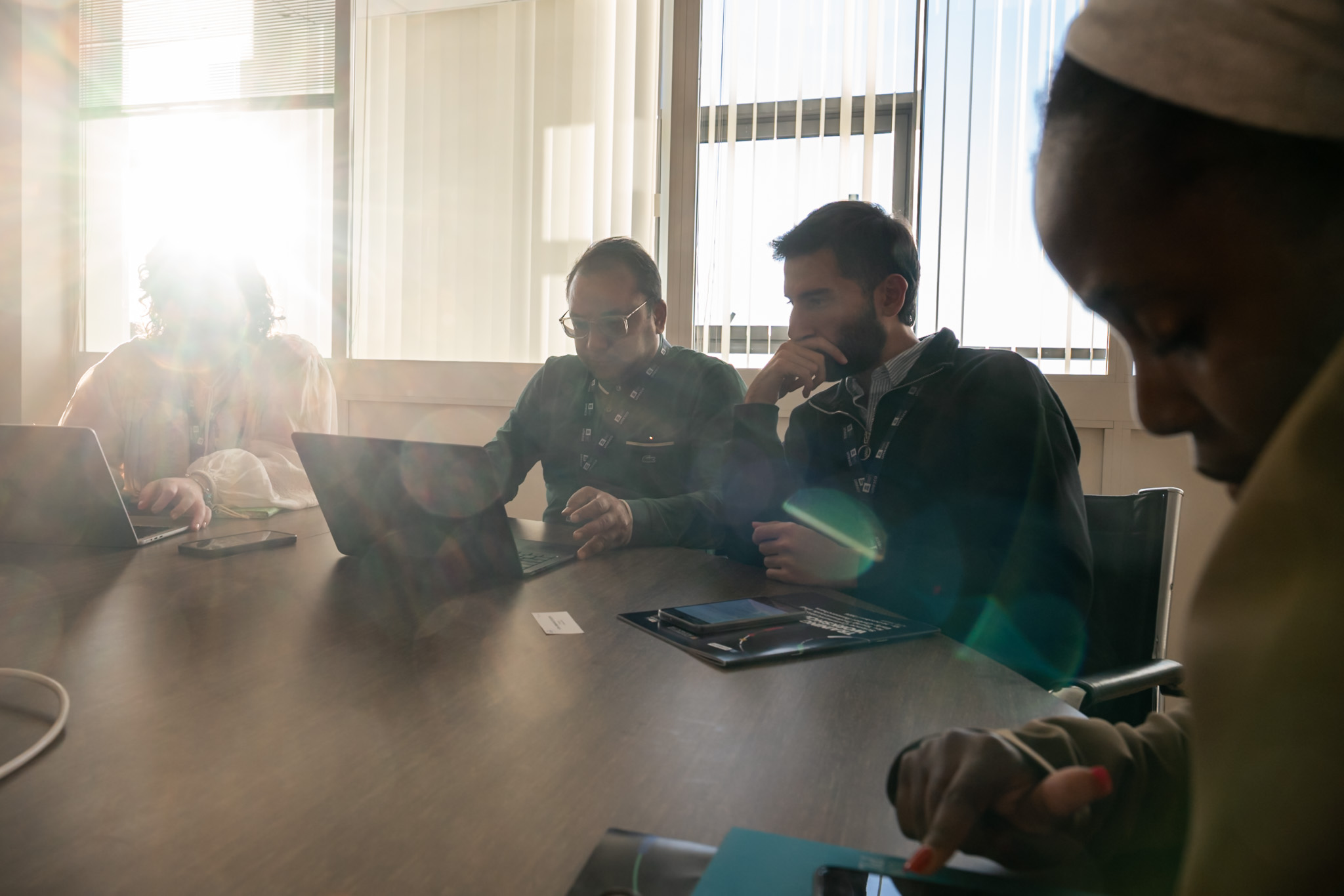
Sessions were led by experts from UNESCO, the University of Plymouth, TWAS, SISSA and the Jožef Stefan Institute, and combined lectures with hands-on group work, role-plays and presentations. Working in small groups, participants chose a real environmental or technology-related issue, identified their target audience and the decision at stake, and built a short message following a problem–evidence–impact–ask structure. On the second day, they presented these messages for feedback.
The workshop opened with a welcome from TWAS executive director Marcelo Knobel and a video message from UNESCO Venice director Magdalena Landry. Nico Pitrelli (SISSA) opened with an introduction to science communication, and Emmanuel Attoh (UNESCO) presented UNESCO’s work on science literacy. The training modules were delivered by Iain Stewart, Abigail McQuatters-Gollop and William Blake (University of Plymouth), Mitja Jermol (Jožef Stefan Institute) and Giovanni Ortolani (TWAS), and Samuel Partey (UNESCO) led the discussion on ethics, inclusion and youth leadership.
The sessions combined lectures with hands-on group work, role-plays and presentations. Participants worked in small groups facilitated by Jing Fang (UNESCO), Munira Raji (University of Plymouth) and Giovanni Ortolani. Each group chose a real environmental or technology-related issue, identified its target audience and the decision at stake, and built a short message following a problem–evidence–impact–ask structure. On the second day, they presented these messages for feedback. Payal Patel (TWAS) and Munira Raji moderated the two days.
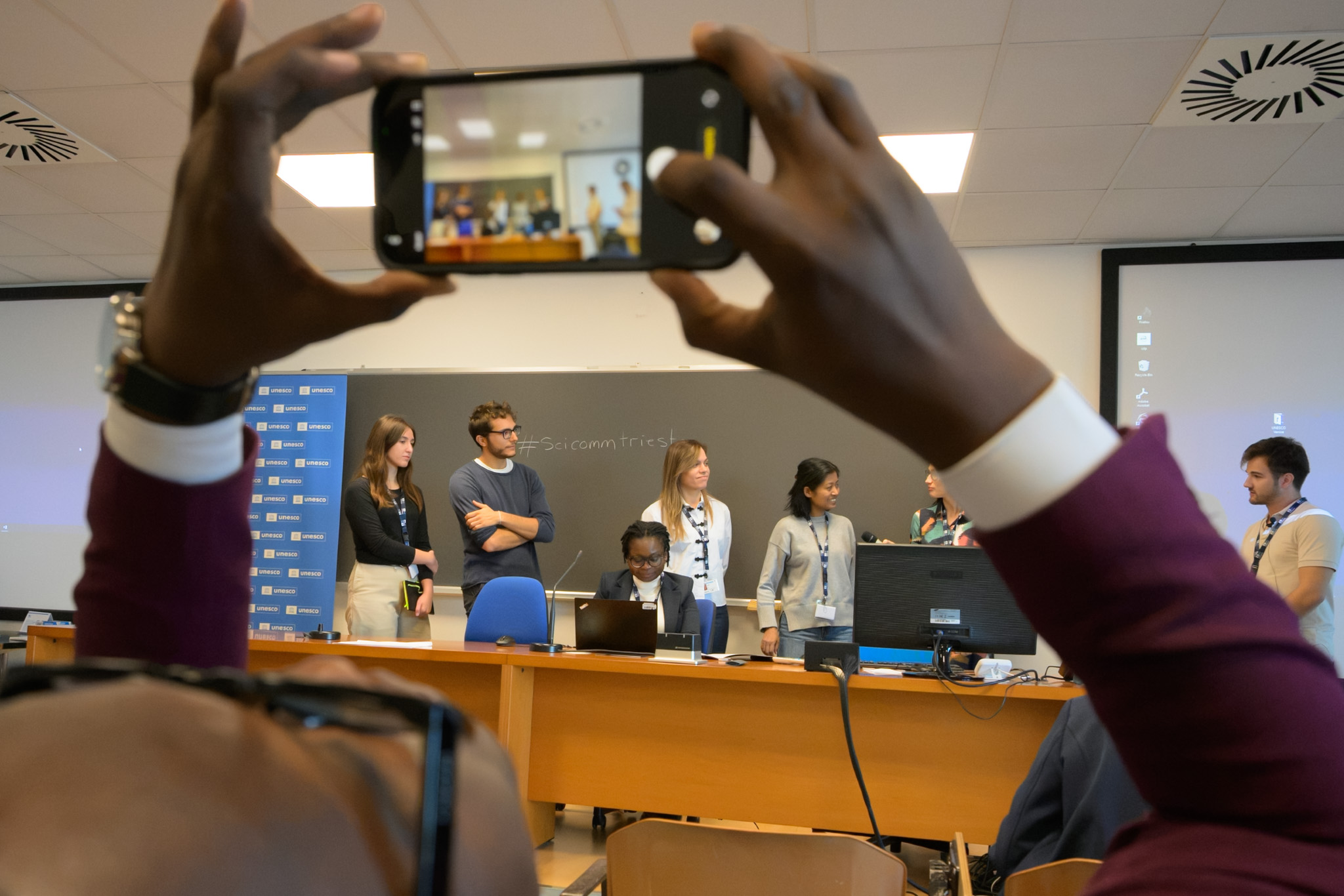
“One of the key lessons I took away from this workshop is that scientists need to communicate more effectively with governments and policymakers. This is particularly important in the current global context, where strong evidence is needed to support decisions on future investments,” said Prajwal Rajbhandari.
“We need to clearly demonstrate how support for science contributes to long-term development, innovation, and economic growth. The workshop gave me practical tools and fresh perspectives on how to present scientific priorities and engage more constructively with decision-makers,” he added.
Beyond building individual skills, the workshop aimed to lay the foundations for a regional network of young science communicators linked to UNESCO programmes and designated sites. This network would help ensure that the next generation of researchers can contribute actively to Europe’s response to environmental and technological challenges.
Giovanni Ortolani
More photos are available on the TWAS Flickr page.