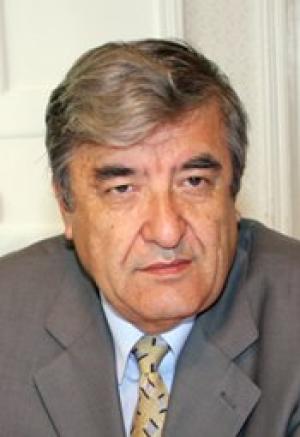

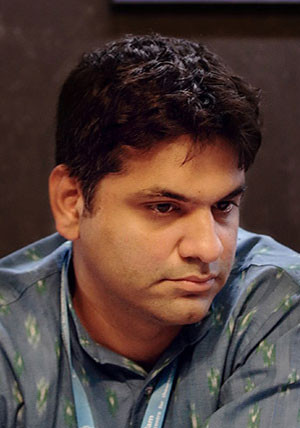
Prof. Ulmas Mirsaidov is the consultant and head researcher in the Chemical, Biological, Radiological, and Nuclear Safety & Security Agency of Tajikistan. He worked as the director at the Regulatory Authority in Tajikistan and as director of the V.I. Nikitin Institute of Chemistry of the Academy of Sciences, Tajikistan. His research areas are the chemistry and technology of inorganic hydrides, mineral raw materials, and radioecology. He had practical research work, which is associated with the recovery of materials from wastes of the Tajik aluminum and Isfara hydrometallurgical production. He was awarded: Kurnakov Medal; Tajikistan’s Lenin Komsomol Prize; Peoples' Friendship Medal, Abu Ali Ibn Sino State Award, and ISESCO Award. Besides, his membership in National academy of Sciences of Tajikistan; International Academy Of Science And Technology in California; International Association of the Academies of Sciences; and Association of Academies and Societies of Sciences in Asia (AASSA).”
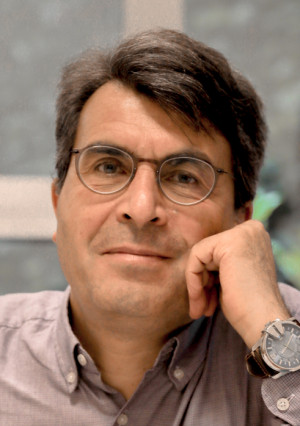
Durmus Demir is a faculty at Faculty of Engineering and Natural Sciences, Sabanci University, Istanbul, Turkey. He obtained his Ph. D. in 1995 in Physics from Middle East Technical University, Turkey. Afterwards, he has held post-doctoral positions at the University of Pennsylvania (1996-97), at the ICTP (1998-2000) and at the TPI, University of Minnesota (2000–03). He joined Physics Department of Izmir Institute of Technology in 2003 and worked there until 2019. Demir has been working in particle physics (naturalness, dark matter, CMS experiment at CERN), gravitation (black holes and inflation in emergent gravity), and quantum physics (quantum tunneling time). His research is theoretical and phenomenological. He was Turkey’s representative at CERN’s Strategy Council Meeting in 2006. He was awarded by a number of national institutions. He is the first Turkish-citizen researcher to win the Alexander von Humboldt Foundation Friedrich Wilhelm Bessel Research Award (2007). He is an OIC-COMSTECH Distinguished Scholar (2021). He is in the editorial board of Letters in High Energy Physics journal. He is a member of the CERN-CMS Exp., Science Academy- Istanbul, and TWAS MAC (Physics).
ELECTED
DATE OF BIRTH
YEAR OF DEATH
Public contact information
LAST ADDRESS
Faculty of Engineering and Natural Sciences Sabanci University 34956, Tuzla, Istanbul, Turkey
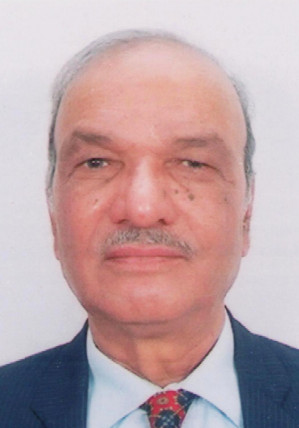
Raghavendra obtained his PhD in 1975 (Sri Venkateswara University). He has held a number of research, teaching and administrative positions at institutions including the Central Plantation Crops Research Inst., Sri Venkateswara Univ., and the Rubber Research Inst. of India. He is professor of plant sciences and JCBose National Fellow at the School of Life Sciences at the Univ. of Hyderabad. He has been awarded: Indian National Science Academy Young Scientist Medal; AP Academy of Sciences Young Scientist Award; UGC Career Award; National Academy of Agricultural Sciences Recognition Award; AP Scientist of the Year; and Indian National Science Academy Professor TS Sadasivan Lecture. His membership includes the Indian National Science Academy, National Academy of Sciences India, Indian Academy of Sciences, National Academy of Agricultural Sciences, and AP Akademi of Sciences.
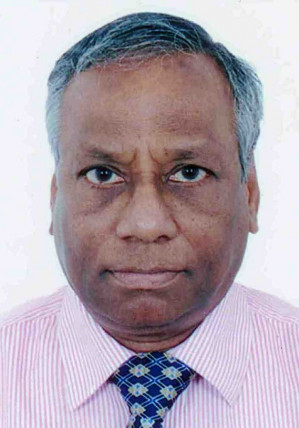
Sukumar (PhD, 1985) is professor of ecology, Indian Institute of Science. His work originally focused on the behaviour and conservation biology of elephants, expanding later to tropical forest ecology and climate change. Sukumar is Fellow of: Indian Acad. of Sciences; Indian Natl. Science Academy; Natl. Acad. Sci. India. He has held visiting positions at Princeton Univ., Columbia Univ. and Kyoto Univ. He has contributed extensively to Indian government policy on nature conservation, and has been a member of the Indian Board for Wildlife and the Project Elephant Steering Committee. He was Chair, IUCN/SSC Asian Elephant Specialist Group (1997-2004). He is the author of four books and over 200 scientific papers, and the recipient of several awards, including: Presidential Award, Chicago Zoological Soc. (1992); Order of the Golden Ark (1997); Whitley Gold Award for Internatl. Nature Conservation (2003); Internatl. Cosmos Prize (2006); JC Bose Natl. Fellowship (2011). He contributed to the work of the Intergov. Panel on Climate Change that shared the Nobel Peace Prize (2007).
Chakrabarti is senior professor, Department of Biochemistry, and Bioinformatics Centre, Bose Institute, Kolkata. He obtained his PhD from the Indian Institute of Science (1981), did postdoc. research at ETH, Zürich, Purdue Univ., UCLA and Caltech, USA, then worked at the National Chemical Lab., Pune (1990-97). Finding patterns in sequence and structure and deriving the underlying factors stabilizing the native fold of proteins and macromolecular interactions have been the hallmark of Chakrabarti’s work, which spans biophysics and bioinformatics. He is also involved in structural studies on proteins from Vibrio cholera, and the understanding the biological activity of nanoparticles. He is a fellow of all 3 science academies of India, and recipient of the JC Bose Fellowship. He is the President (2013-16) of the Asian Crystallographic Association.