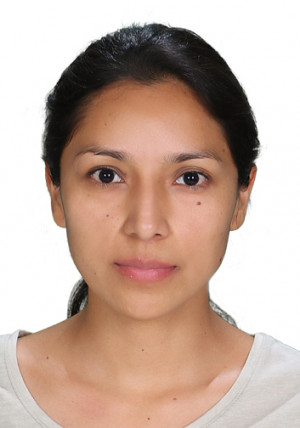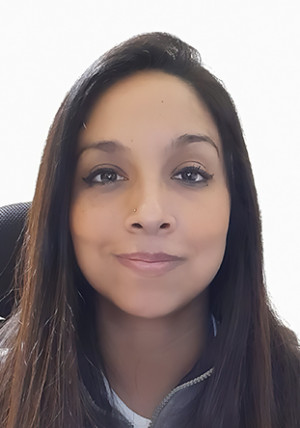

Dionicia Gamboa Vilela (PhD, 2008, Institute of Tropical Medicine in Antwerp, Belgium, and University of Maastricht, The Netherlands) is professor at the Department of Cellular and Molecular Sciences, Faculty of Science and Engineering (FACI), Universidad Peruana Cayetano Heredia (UPCH), and member of the Institute of Tropical Medicine Alexander Von Humboldt (IMTAvH-UPCH). She is the director of the Laboratory Malaria: Parasites and vectors. Her group carries out multidisciplinary studies about the malaria transmission dynamics in the Peruvian Amazon region. She has published more than 100 original articles, and has supervised 40 under and postgraduate students who have graduated with a thesis in her lab. She has been a member of the Organization for Women in Science for the Developing World (OWSD) since 1996. She received the L’Oréal-UNESCO Fellowship in 2003, the OWSD - Elsevier Foundation Award for Latin America & Caribbean (2013), and the L'Oréal - UNESCO - CONCYTEC - ANC National Award For Women in Science - Peru in 2015. She is a member of the American Society of Tropical Medicine and Hygiene and since 2013, she is member of the Peruvian National Academy of Science (ANC).
De Gouveia Dal Pino (PhD in astronomy, University of São Paulo, 1989) is full professor, Department of Astronomy, Institute of Astronomy, Geophysics, and Atmospheric Sciences, University of São Paulo (IAG-USP), Brazil. She had postdoctoral affiliation at Harvard University (1991–1993), and was associated researcher at International Centre for Theoretical Physics, Italy (1994–2001). She introduced in Brazil high-performance magnetohydrodynamic (MHD) numerical simulations to model astrophysical sources: from solar interior, star formation regions, jets and black holes, to galaxy clusters. She has pioneering studies on MHD turbulence, magnetic reconnection, and cosmic ray acceleration in magnetized systems. She is Brazilian principal investigator of the largest gamma-ray observatory in construction, the Cherenkov Telescope Array (CTA), and of ASTRI Mini-Array—precursor of CTA. She is Member of the Brazilian Academy of Sciences and the Brazilian Astronomical Society. She was awarded the Claudia Prize of Woman in Science (2017), and holds the Jabuti Award for Best Scientific Book (2001). She supervised PhD thesis with national honors and Best Theses in Astronomy of IAG-USP.
Universidade de São Paulo – Instituto de Astronomia, Geofísica e Ciências Atmosféricas – Cidade Universitária – Rua do Matão, 1226 – 05508-090 São Paulo, SP – Brazil
Cordoba De Torresi is professor, Institute of Chemistry of the University of São Paulo (USP). She graduated in chemistry (1983) and got her PhD (1988) at the Universidad Nacional de Córdoba, Argentina, working with electrochemistry, spectroscopy and materials science. After a postdoctoral internship at Université Pierre et Marie Curie, National Centre for Scientific Research, France (1988–1990), she moved to Brazil as a researcher at State University of Campinas and Federal University of São Carlos. She joined the Institute of Chemistry, USP in 1996, and became a full professor in 2006. She has served as president of the Undergraduate and Graduate Commissions and vice-provost of research of USP. Her main interests are research on electrochromism, chemical sensors and electrocatalysis enhanced by plasmonics. She received: Tajima Prize from the International Society of Electrochemistry; National Order of Scientific Merit, Commander category, from the Presidency of the Republic; American Chemical Society Award for Brazilian Women in Chemistry, Scientific Leader category. She is a Member of the Brazilian Academy of Sciences and of the Academy of Sciences of the State of São Paulo.
Caballero Mota received more than 105 awards and distinctions: Finlay Order; 10 Cuban Academy of Sciences Awards; TWAS Regional Partner's Award for Young Scientists (Computer Science) awarded by the Cuban Academy of Sciences; Distinguished Foreign Expert Award in the 100 foreign experts plan from Hebei province, China; Distinguished Researcher of Hebei International Studies University, China; Sofia Kovalevskaya Award; 5 Special Distinctions by Cuban Ministers; National Award for Young Researcher in the Category of Technical Sciences; Pablo Miquel National Prize form the Cuban Society of Mathematics and Computing; National Vanguard of the Science Union; several National Prizes awarded by the Youth Technical Brigades, 20 provincial CITMA Awards, among others. She has participated in more than 200 congresses worldwide. She has over 140 scientific publications, several of them within the Web of Science and referenced databases. She participated in more than 30 research and development projects and has 33 software registrations in her name at the Cuban Copyright Center. 33 diploma projects, 64 master's theses, and 10 doctoral theses have been defended under her tutorship.
Bozza is a senior investigator and head of Laboratory of Immunopharmacology at Oswaldo Cruz Institute, Fundação Oswaldo Cruz (FIOCRUZ), Brazil; she got her MD from the State University of Rio de Janeiro, and her PhD in cellular and molecular biology from the Oswaldo Cruz Institute, Brazil. She received postdoctoral training under Dr. Peter Weller at Harvard Medical School as Pew Latin American Fellow. Bozza is a senior scholar of the Brazilian National Council for Scientific and Technological Development (CNPq) and a member of the Brazilian Academy of Science. She has mentored the work of 24 postdoctoral, 29 PhD and 30 MSc students. Her group's long-term goal is to conduct translational studies that contribute new knowledge on the interplay of metabolic and inflammatory mechanisms in the pathogenesis of emergent and/or severe infectious diseases, aiming at identifying biomarkers and therapeutic targets, including dengue, Zika and COVID-19. In response to the COVID-19 emergency, her group characterized mechanisms involved in thromboinflammation and hypercoagulability in severe COVID-19 patients, and contributed to defining immunometabolic mechanisms involved in infection.
B. Noronha received his BS degree from the Federal University of Rio de Janeiro (UFRJ) in 1987, MSc degree in 1989, from the Alberto Luiz Coimbra Institute for Graduate Studies and Research in Engineering (COPPE)-UFRJ, and PhD degree in 1994 from COPPE-UFRJ and Institut de Recherches sur la Catalyse – Lyon, France. In 1996, he joined the catalysis group of the National Institute of Technology, Brazil. He worked in a postdoctoral position with Prof. Daniel Resasco at Oklahoma University from 1999–2000. He has been a visiting professor in a research chair at the Ecole Centrale de Lille in the Biomass Valorisation Group at Unité de Catalyse et de Chimie du Solide since 2019. He is a category 1A researcher of the Brazilian National Council for Scientific and Technological Development (CNPq), and a researcher of the State of Rio de Janeiro (FAPERJ), Brazil. Since 2008, he has been one of the Brazilian representatives on the International Association of Catalysis Societies. In 2021, he was elected to the Brazilian Academy of Sciences.
Aretxaga is a class-C researcher at the National Institute of Astrophysics, Optics and Electronics (INAOE), Mexico, a member of the Mexican National Researcher System (equivalent to Full Professor), and a member of the Mexican Academy of Sciences (AMC). Since her arrival in Mexico in 1998, she has built her research group on galaxy formation and evolution and contributed to the development of the astronomy community. In 2011–2016 she was Head of Department of Astrophysics at INAOE. In 2006–2013, she coordinated the astronomy section of AMC. Since 2016, she has directed the International Schools for Young Astronomers of the International Astronomical Union, that bring education, development and networking opportunities to graduate students in isolated areas. The main focus of her research is to unravel the importance of massive star formation around supermassive black holes and their role in galaxy formation and evolution. She has coauthored over 140 research papers in Q1 journals, and has been invited more than 100 times to international conferences and other research institutes as a speaker. She also has an active outreach programme of talks, articles and pieces in social media.