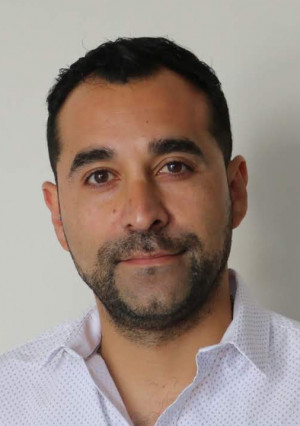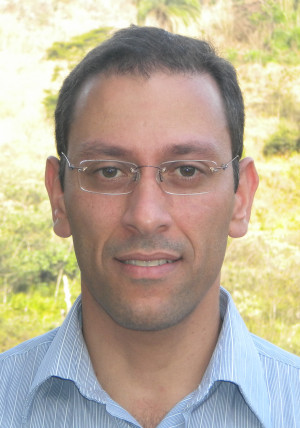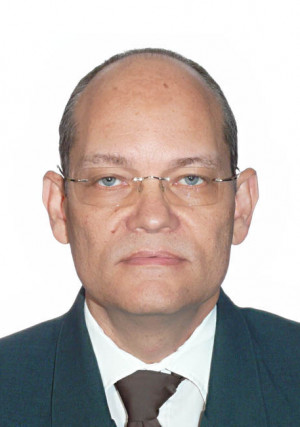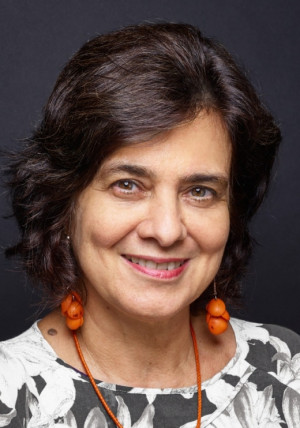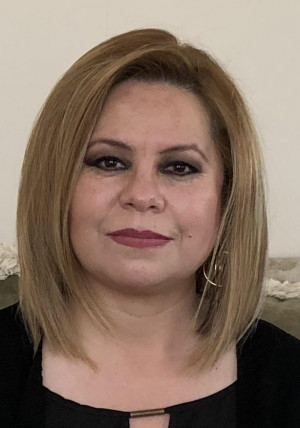

Professor of Physics at the Federal University of Minas Gerais (UFMG) since 2002, Jorio de Vasconcelos earned his doctoral degree in physics from the same institution in 1999, working with phase transitions in incommensurate systems. He was a Postdoctoral Fellow at the Massachusetts Institute of Technology (MIT), Cambridge, USA (2000–2001), where he worked with the optical properties of nanomaterials, focusing on Raman spectroscopy and optical properties of carbon nanomaterials. Back to Brazil, he founded the Laboratory of NanoSpectroscopy (LabNS) at UFMG in 2006, where he works with research and development of scientific instrumentation in optics for the study of nanostructures with applications in new materials and biomedicine. He held the positions of Coordinator of Strategic Studies and Information at Inmetro (2008–2009) and Director of Technological Transfer and Innovation (2010–2012), head of the Physics Depart, and Dean of Research (2016–2018) at UFMG. He was a Visiting Professor at the Swiss Institute of Technology (ETH Zurich, Switzerland, 2013) and at the Freie Universitat, Berlin, Germany (2016).
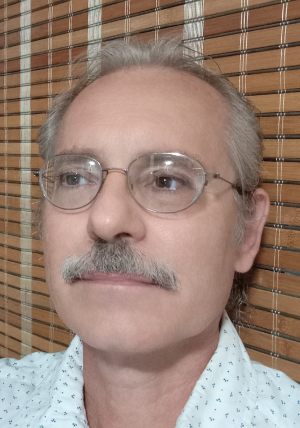
Altshuler Alvarez graduated summa cum laude from the Physics Faculty, University of Havana, Cuba in 1986, and got his PhD in 1994. Among his research interests are superconductivity, complex systems, granular matter and porous materials. Altshuler is Professor at the Physics Faculty, University of Havana. He has been Invited Researcher at the Texas Center for Superconductivity (USA), the Ecole supérieure de physique et de chimie industrielle (ESPCI) Paris (France), the Norwegian Academy of Sciences and Letters (Norway), and the Rockefeller University (USA) among others. Altshuler is Editor in Chief of the Cuban Journal of Physics, and an editorial board member of Granular Matter and Physical Review Applied. He has authored several books, such as Guerrilla Science: Survival Strategies of a Cuban Physicist (Springer, 2017). Among his hobbies are guitar playing (and composition), cartoon drawing, writing of short stories, elderly caregiving, snorkeling, plumbing, car fixing, tasteless cooking, and a dangerously long etcetera performed with different levels of love, audacity and mediocrity. He is also an avid science communicator–where a vitriolic sense of humor often plays a key role.
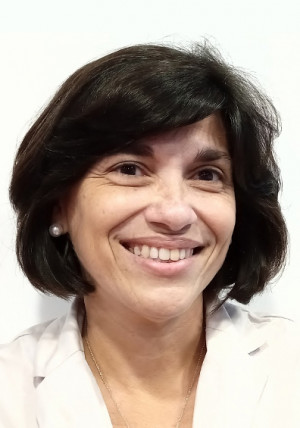
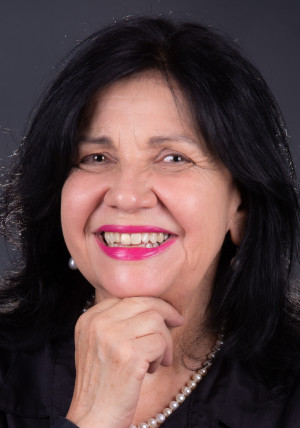
Crombet (PhD,2004) is a Medical Doctor and Immunology Specialist (1997). Since 2009 she has been Medical Director of the Center of Molecular Immunology of Havana. She is Member of the Cuban Academy of Sciences; Senior Faculty of the Superior Institute of Medical Sciences of Havana; Member of the Board of Directors of Innovative Immunotherapy Alliance, a joint venture between US and Cuba; Member of the Cuban and Latin-American Societies of Immunology; Member of the Cuban and American Societies of Oncology. She has published more than 100 papers and participated in more than 200 international congresses as speaker. Crombet has received several times the annual National Award of the Cuban Academy of Sciences, the Technological Innovation Award of the Cuban Ministry of Science, and the TWAS Prize for Young Scientists in Developing Countries (2007). Crombet's main area of expertise is cancer immunotherapy and her work has contributed to the registration in Cuba and abroad of two cancer vaccines and two monoclonal antibodies for several epithelial tumors, autoimmune diseases and COVID-19. She is member of the international panel of experts on COVID-19 of the InterAcademy Partnership.
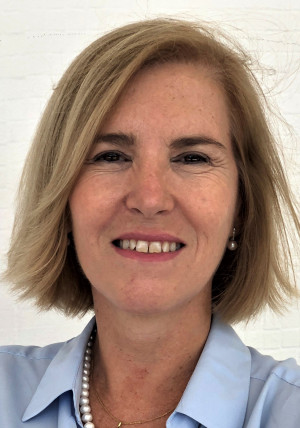
Dezotti (DSc, 1992, University of Campinas, Brazil) is Professor at COPPE, Federal University of Rio de Janeiro. She received more than 30 awards, among which the COPPE Giulio Massarani Award - Academic Merit by COPPE/UFRJ (2010), in recognition of her scientific production of the highest level. She was awarded four times as Scientist of Our State from the Amparo Research Foundation of State of Rio de Janeiro (FAPERJ), Brazil. For the consolidation of the national research in Advanced Oxidation Processes (POAs), she received a tribute of the VIII Meeting on Oxidative Processes and II Iberoamerican Conference on POA (2015). She coordinated numerous projects with industries. She has published three books that are adopted as a reference in Brazilian universities. She has published in the best international journals, had outstanding performance in the training of MSc and DSc students and is one of the most cited researchers in Brazil, in the area of chemical engineering. Additionally, she is Founding Member of the COPPE Women Support Group. She was elected Full Member of the Brazilian Academy of Sciences in 2020 in recognition of her scientific production and its impact in Brazil.
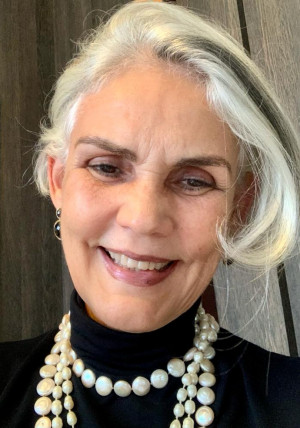
Goulart graduated as a pharmacist at Universidade Federal de Minas Gerais (UFMG), Brazil, where she then got her PhD in Science (1983). She did postdoctoral studies in London, Münster, and Paris. She was a Visiting Professor at Ecole Normale Supérieure, Département de Chimie, Paris (2004–2005, 2007, 2008). She is now a Full Professor at the Federal University of Alagoas, Institute of Chemistry and Biotechnology (UFAL); a researcher 1B at Brazilian Research Council (CNPq); and full member of the Brazilian Academy of Science (ABC), since 2015. She has published 210 articles, nine patents, 12 book chapters. She received several awards: Young Scientist Award by CNPq (1985); Foreign Young Chemist Award (1997) at International Symposium-Electroorganic Synthesis ’97, Japan; National Award Marie Curie - Distinguished Women on Chemistry by the Brazilian Society of Chemistry (SBQ) (2011); Jabuti Award (2012); Award Roberto Alves de Lima, by UFAL (2018); Prêmio Inovadores by Inova, Universidade Estadual de Campinas (UNICAMP) (2020); and Brazilian Women in Science, Scientific Leadership by SBQ/American Chemical Society (2021). She supervised 31 MSc, 40 PhD students and 10 postdoctoral fellows.
Guillen is currently Biomedical Research Director at the Center for Genetic Engineering and Biotechnology (CIGB) in Havana. He received his Bachelor in Science degree in Chemistry and his Master in Chemistry in 1986 in Odessa I.I. Mechnikov National University, and his PhD degree in Biological Sciences in 1995 from Havana University. He joined the CIGB in 1986. For more than 25 years, he was supervisor of several projects related to prophylactic and therapeutic vaccine developments on hepatitis, dengue, meningitis, pertussis, cancer and COVID as well as drug development against infectious diseases, cancer, cardio protection, neuro-protection and wound healing. Guillen is a Senior Researcher at CIGB, Full Professor at the Havana University and Latino American School of Medicine, Distinguished Professor-at-Large at the University of Science and Technology of China and has been a Member of the Cuban Academy of Science since 2012. He is also member of several scientific societies, editorial boards and advisory committees. He has published 226 scientific papers and holds 56 patents. He has been honored with 52 National Awards for Scientific Results from the Cuban Academy of Sciences.
Hungria got her PhD in Agronomy (Soil Science) from Universidade Federal Rural do Rio de Janeiro, Brazil, and held postdoctoral positions at the universities of Cornell, California-Davis (USA) and Seville (Spain). She has been a Researcher at Embrapa since 1982, at Embrapa Soja (Londrina) since 1991, and a Researcher of National Council of Scientific and Technological Development (CNPq) since 1992. She is a Professor of microbiology and biotechnology at the University of Londrina, and supervised more than 100 MSc and PhD students. Her experience is in agronomy with emphasis on soil biotechnology: biological nitrogen fixation, biodiversity; taxonomy and phylogeny of prokaryotes, microbial ecology, soil microbiology, plant growth promoting bacteria; plant physiology; inoculant production; technologies of inoculation; omics sciences; microbial culture collections. She has over 500 refereed scientific articles, book chapters, books and technical publications. She launched more than 20 technologies, including microbial strains and commercial inoculants. She received more than 20 prizes, including the TWAS-Lenovo Science Award (2020). She is a member of the Brazilian Academy of Sciences.
Nísia Trindade Lima was the first woman to hold the position of Brazil’s Minister of Health (2023–2025) and to preside over the Oswaldo Cruz Foundation (Fiocruz, 2017–2022). She holds a PhD in Sociology and a Master’s in Political Science. She is a Public Health researcher at the Oswaldo Cruz Foundation, Fiocruz, a professor in the Graduate Program in the History of Science and Health, and a collaborating professor in the Graduate Program in Sociology at Institute of Social and Political Studies of the State University of Rio de Janeiro (IESP-UERJ). Her work focuses on Brazilian social thought, public health ideas, and state-building. As Fiocruz president, she led the COVID-19 response and joined international efforts such as Coalition for Epidemic Preparedness Innovations, the Lancet Commission on Global Health Threats, and the Global Council on Inequality, HIV and Pandemics. She launched the Fiocruz Strategy for the 2030 Agenda, aligning the UN SDGs with institutional planning. A member of the Brazilian Academy of Sciences, she was awarded the Knight of the Legion of Honor by France. Since May 2025, she holds the Olavo Setúbal Chair at the University of São Paulo.
Rada got her BSc in biochemistry and pharmacy from Universidad Mayor de San Andrés (UMSA), Bolivia, and she holds a master's degree in public health with major in epidemiology.
She works at the Cytogenetics Unit, Genetics Institute, Medicine School, UMSA. She was a member of the Regional Committee for Latin America and the Caribbean of the International Council for Science (RCLAC ICSU) and Past-President of the Regional Committee for Latin America and the Caribbean of the International Council of Science (RCLAC ISC). She was Focal Point for Bolivia in the Women for Science Program of the InterAmerican Association of Science Academies (IANAS).
Ana is Co-Chair of the Liaison Committee of the Regional Focal Point-LAC of the International Science Council (LC ISC RFP-LAC). She is member of the National Academy of Sciences of Bolivia, member of the Latin American Network of Biological Dosimetry (LBDNet), member of the Organization for Women in Science for the Developing World (OWSD), member of the Bolivian Genetics Society.
She has published several scientific articles. The main research topics in which she is involved are: Human Genetics, Cytogenetics, and Biological dosimetry.
Cytogenetics Unit of the Genetics Institute – Faculty of Medicine Piso 9 – Mayor de San Andrés University – Av. Saavedra No. 2246 Miraflores – La Paz – Bolivia