

TWAS Directory of
Fellows and
Young Affiliates
The strength of TWAS resides in the scientific influence and impact of its global network.
Fellows and YAs in action
see all
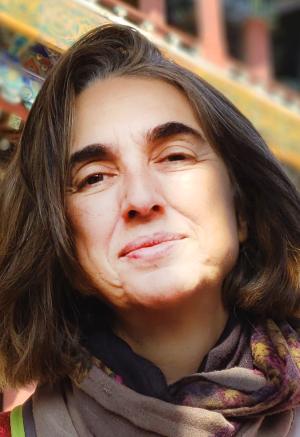
![TWAS Fellow Itziar Aretxaga. [Photo provided]](/sites/default/files/styles/directory_action/public/media/aretxaga-standing-web.jpg?itok=935lRAJw)
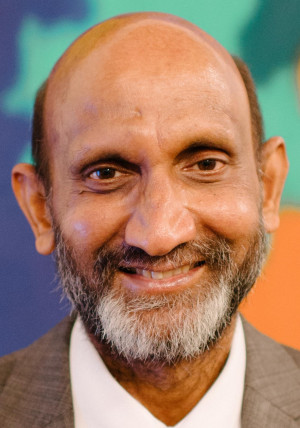
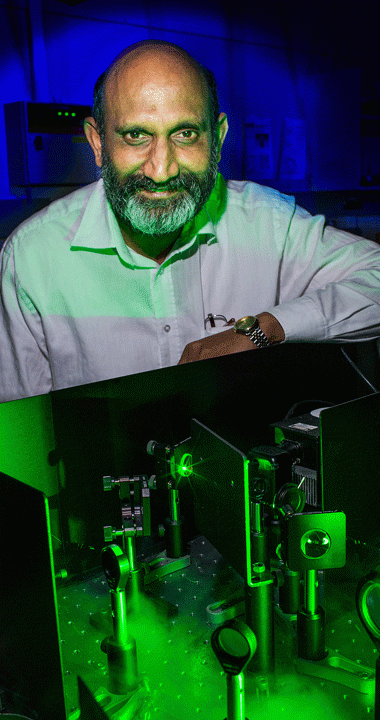
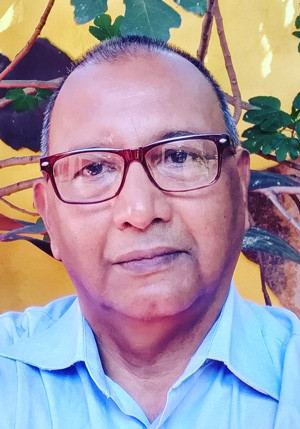
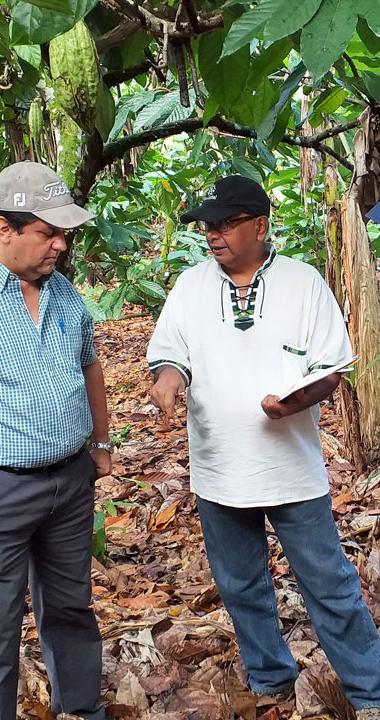
TWAS Fellow’s essay makes the case for trusting science
Aretxaga, Itziar
Current nationality
Mexico
Current country of residence
Mexico
Biodata
Aretxaga is a class-C researcher at the National Institute of Astrophysics, Optics and Electronics (INAOE), Mexico, a member of the Mexican National Researcher System (equivalent to Full Professor), and a member of the Mexican Academy of Sciences (AMC). Since her arrival in Mexico in 1998, she has built her research group on galaxy formation and evolution and contributed to the development of the astronomy community. In 2011–2016 she was Head of Department of Astrophysics at INAOE. In 2006–2013, she coordinated the astronomy section of AMC. Since 2016, she has directed the International Schools for Young Astronomers of the International Astronomical Union, that bring education, development and networking opportunities to graduate students in isolated areas. The main focus of her research is to unravel the importance of massive star formation around supermassive black holes and their role in galaxy formation and evolution. She has coauthored over 140 research papers in Q1 journals, and has been invited more than 100 times to international conferences and other research institutes as a speaker. She also has an active outreach programme of talks, articles and pieces in social media.
ELECTED
DATE OF BIRTH
Public contact information
EMAIL
itziar@inaoep.mx
ADDRESS
Inst. Nacional de Astrofísica, Óptica y Electrónica (INAOE) - Aptdo. Postal 51 y 216 72000 Puebla - Mexico
Last updated on 02/05/2025
Generating stars, near and far
Quality education
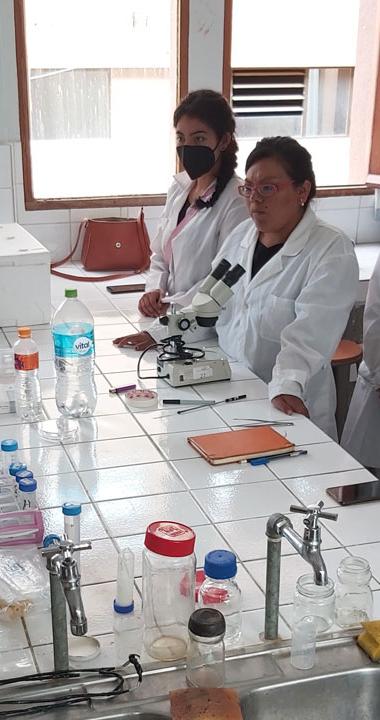
Jagadish, Chennupati
Current nationality
Australia
Current country of residence
Australia
Biodata
Jagadish is a distinguished professor and the head of the Semiconductor Optoelectronics and Nanotechnology Group at the Australian National University. In 2021, he has been appointed president of the Australian Academy of Science, the latest of a long list of prestigious leadership activities. He has covered important editorial position in over 10 scientific journals. He published more than 650 journal papers, holds five US patents, and contributed, as co-author or co-editor, to over 15 books. He is a Fellow of the Australian Academy of Science; a distinguished Fellow of the Chinese Academy of Sciences; a visiting professor at Oxford University, UK; a distinguished chair professor for research at the National Taiwan University, among many other positions. Among his awards are: the Lloyd Rees Memorial Lecture by the Australian Academy of Science (2020); the Thomas Ranken Lyle Medal by the Australian Academy of Science (2019); and UNESCO Medal for contributions to the development of Nanoscience and Nanotechnology (2018). In 2025, he was elected a Fellow of the Royal Society (UK).
ELECTED
Public contact information
Last updated on 21/05/2025
If you wish to be happy, help others
Quality education
Guharay, Falguni
Current nationality
India
Current country of residence
Nicaragua
Biodata
Guharay (Ph.D.,1982, University of Nottingham), is currently Member of Faculty of Engineering and Arquitecture of Universidad Americana (UAM) in Nicaragua. Earlier he served as Livelihood Specialist with NRC, Program manager Climate Smart Cocoa World Cocoa Foundation (WCF), Scientist Research for Development, International Center for Tropical Agriculture (CIAT); Programme Leader for Integrated Pest Management and Agroforestry, Tropical Agricultural Research and Higher Education Center (CATIE), Professor of Plant Protection, National Agricultural University, Nicaragua (UNA) and Research Assistant Professor Biophysics, State University of New York at Buffalo. He is a member of the Latin American Society of Agroecology. He elucidated the biophysical basis of mechanoreception by discovering stretch-activated ion channels. His research helped to scale the biological control of vectors of Malaria in Nicaragua and laid the foundation of ecological management of agroforestry systems in Mesoamerica. He was awarded National Scholarship for Ph.D. studies by Govt. of India in 1978, the Research Scientist of the year by CATIE 2003, and the Coffee personality of Nicaragua by RAMACAFE 2006.
ELECTED
DATE OF BIRTH
Public contact information
EMAIL
fguharay@gmail.com
PHONE
(+505) 57766946
ADDRESS
A 193 Bosque de Altamira, Managua, Nicaragua
Last updated on 23/10/2025
A sweet path to sustainable development
Climate action
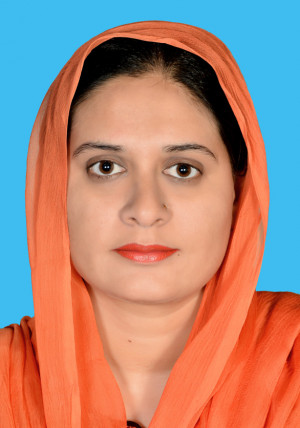
Pakistan
08. Mathematical Sciences
Young Affiliate
Affiliated from 2021 to 2026
Affiliated from 2021 to 2026
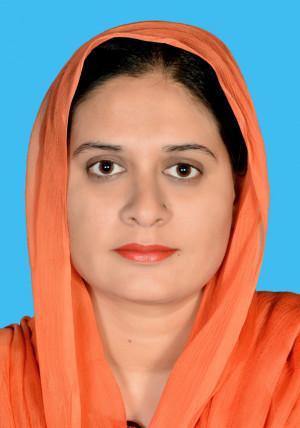
Saleem, Rabia
Young Affiliate
Saleem Rabia
Current nationality
Pakistan
Current country of residence
Pakistan
AFFILIATED FROM
2021
AFFILIATED UNTIL
2026
Section
08. Mathematical Sciences
TWAS Regional Office
TWAS Central and South Asia Regional Partner (TWAS-CASAREP)
Country where living and working for the majority of the last 10 years
Pakistan
Last updated on 05/05/2025
Malawi
08. Mathematical Sciences
Young Affiliate
Affiliated from 2023 to 2028
Affiliated from 2023 to 2028
good_health
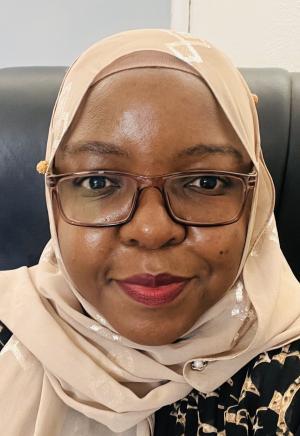
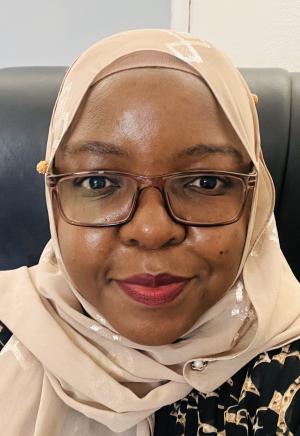
Twabi, Halima Sumaya
Young Affiliate
Twabi Halima Sumaya
Current nationality
Malawi
Current country of residence
Malawi
Affiliation / Institution
School of Applied and Natural Sciences, University of Malawi, Malawi
Biodata
Halima Twabi is an associate professor of statistics at the Department of Mathematical Sciences, University of Malawi. She holds a Bachelor of Science in statistics, as well as a Master of Science and a PhD, both in biostatistics from the University of Malawi. She studies causal inference for observational data, multivariate statistics, longitudinal and survival analysis, and statistical modelling and analysis of social and health data. Her recent work involves developing causal inference methods for non-experimental studies with multiple outcomes. In 2020, she received the L'Oréal-UNESCO for Women in Science Sub-Saharan Africa Young Talent Award for her work on applying causal inference to maternal and child health. In 2023, she was nominated treasurer of the International Biometric Society Sub-Saharan Africa Network, and treasurer of the IBS Malawi region. She is a founding member of the Girls in Science, Technology, Engineering, Arts and Mathematics network in Malawi, and collaborates on the project "Strengthen Modelling and Analytics Capacity and Ecosystem for Women’s Health" funded by the Bill and Melinda Gates Foundation.
Sustainable Development Goals
AFFILIATED FROM
2023
AFFILIATED UNTIL
2028
Country of birth
Malawi
DATE OF BIRTH
3
April
1991
Section
08. Mathematical Sciences
TWAS Regional Office
TWAS Sub-Saharan Africa Regional Partner (TWAS-SAREP)
Country where living and working for the majority of the last 10 years
Malawi
Last updated on 05/05/2025
Former Young Affiliates elected to the TWAS fellowship
Egypt
01. Agriculture, Nutrition & Food Systems Sciences
Young Affiliate Alumnus elected to TWAS
India
09. Physics, Astronomy & Space Sciences
Young Affiliate Alumnus elected to TWAS
Brazil
08. Mathematical Sciences
Young Affiliate Alumnus elected to TWAS
Argentina
03. Medical & Health Sciences
Young Affiliate Alumnus elected to TWAS
Malaysia
09. Physics, Astronomy & Space Sciences
Young Affiliate Alumnus elected to TWAS
Young Affiliates Alumni
When Young Affiliates complete their five-year term, they become Alumni. Young Affiliate Alumni are encouraged to remain engaged with TWAS initiatives and to take advantage of TWAS programmes and prizes.